






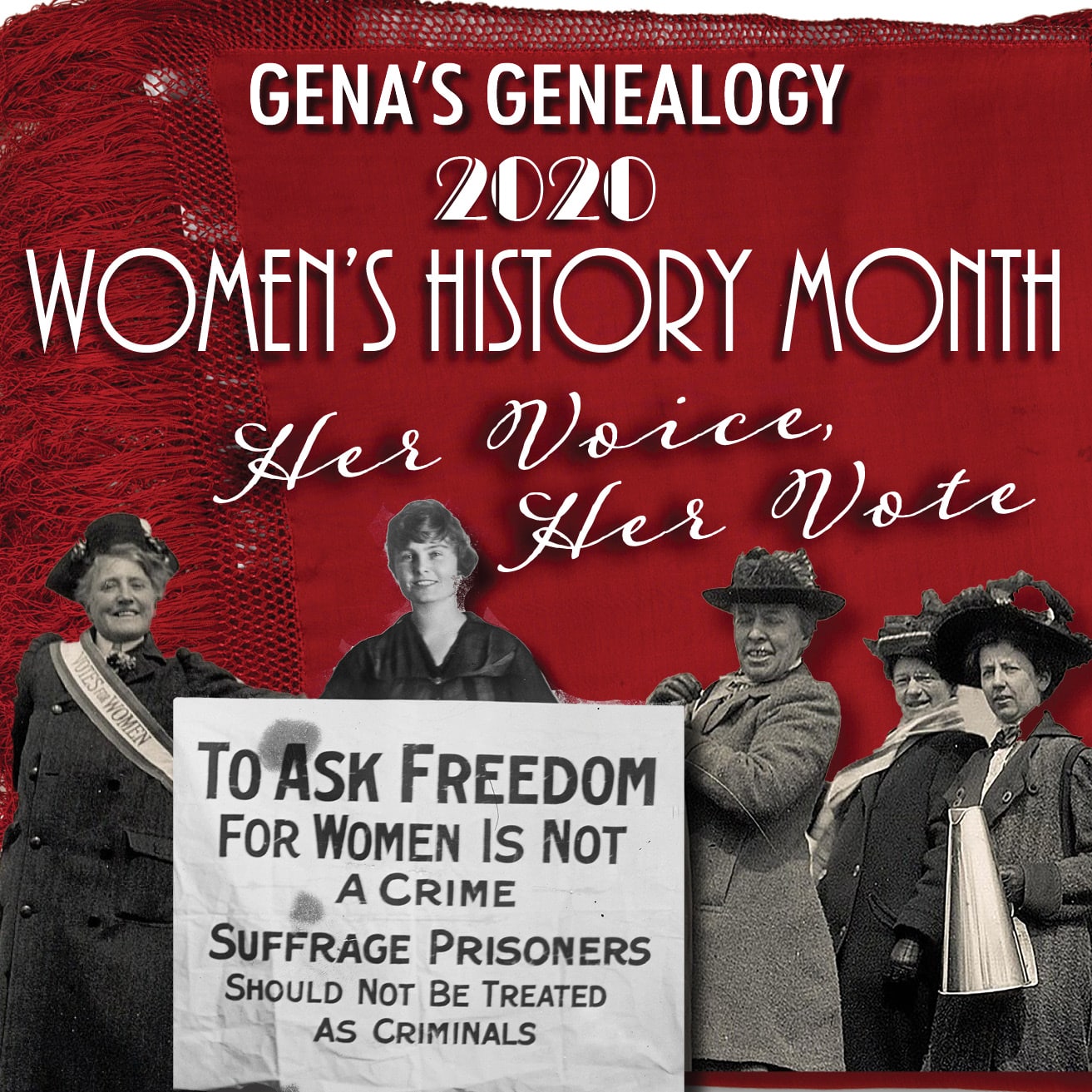
Since 2013, I have written a post a day for Women’s History Month for my blog Gena’s Genealogy. Each year I select a theme and then write posts that will help researchers better understand how to successfully research their family history. This year’s theme is Her Voice, Her Vote which focuses on suffrage and voting records.
In writing 30 posts year after year as well as talking to groups about researching female ancestors, there are a few things that become obvious as I consider what researching female ancestors is all about.
We Don’t Do a Good Enough Job of Exhausting Sources
Sure, you know you’re supposed to do an exhaustive search but do you? Maybe the better question is what is an exhaustive search? Is my idea of an exhaustive search someone else’s “I’m just getting started?”
Elizabeth Shown Mills on the Evidence Explained website provides guidance on what a reasonably exhaustive search looks like. She writes "Thorough research, I would argue, is not just "looking everywhere." It's not "a search in all logical places" for the one document that answers a specific question. That's just a search. But a search is only one step in the research process. It's not even the first step. And no conclusion should ever be based on one document."
She goes on to talk about the need for a research plan. So that “reasonably exhaustive search” is research that includes a multi-step plan and ends with all contradictions resolved. It’s much more than finding one document and coming to a conclusion about an ancestor based on that one document.
In my humble opinion, that search or research also includes looking beyond what’s online. Too often a researcher's brick wall is simply the product of limiting research to a few websites. That’s not research. Research requires searching sources found online and off.
We Don’t Consider Sources That Document Women
Many years ago when FamilySearch had just launched I was giving a presentationing to a group. An attendee, aggravated by his lack of relevant results, exclaimed to the group how he hated the website and how worthless it was. I asked him what he was hoping to find. After he replied, I answered that I wasn’t surprised that he didn’t find the website useful. None of the databases had the records he was looking for.
Researching female ancestors is different. Historically women aren’t documented in the same ways as men because they didn’t have the same legal rights. If we limit our research to records that don't document women, we will end up frustrated. So our research into their lives needs to include this knowledge. In addition to seeking information from the place and time period she lived, we should also include documents and resources that are meant to document women’s lives.
People roll their eyes at me (yes, I know cookbooks seem like a weird genealogy resource) when I suggest that they incorporate women-specific databases and records to their research. But there is a reason I do that. Those sources are meant to include women. Some of these women-specific resources and sources include:
- The Quilt Index
- Community Cookbooks
- Church Records
- Women’s Auxiliaries to men’s fraternal orders
- Women’s organization records
- Church based women’s auxiliaries
- Newspapers (these can document all aspects of women’s lives from vital record events to organizations, and gossip columns)
Yes, there’s more than that but you get the idea. Researching female ancestors requires us to be creative and to ask what records exist for that time and place. Not sure? Search for archival records for the place your ancestor lived in ArchiveGrid, seek out some non-fiction books about women’s lives from that place, time period, or a shared aspect of your ancestor’s life and flip back to the endnotes for ideas of sources and places to research.
There’s SOOOOO Much Out There
I’m endlessly curious and I find on any given day that I’m looking up historical events, reading history books, asking questions of archivist, or just gaining ideas from my friends' Facebook postings. I do this because it helps me see how many resources and records are out there that are unique and helpful to genealogists. My Women’s History Month blog series has allowed me to share some of those resources. This year one of my favorite record sets I've shared was the Massachusetts voting records. Massachusetts school suffrage dates to 1879 and provided some women with the ability to vote in school elections. You can take a look at the Boston records on FamilySearch.
Start asking questions about records and what might document your ancestor in her time, place, and situation. Start finding relevant resources by going to the FamilySearch Catalog and conducting a Place search. You could also do a Keyword search for Women and see what might help your research.
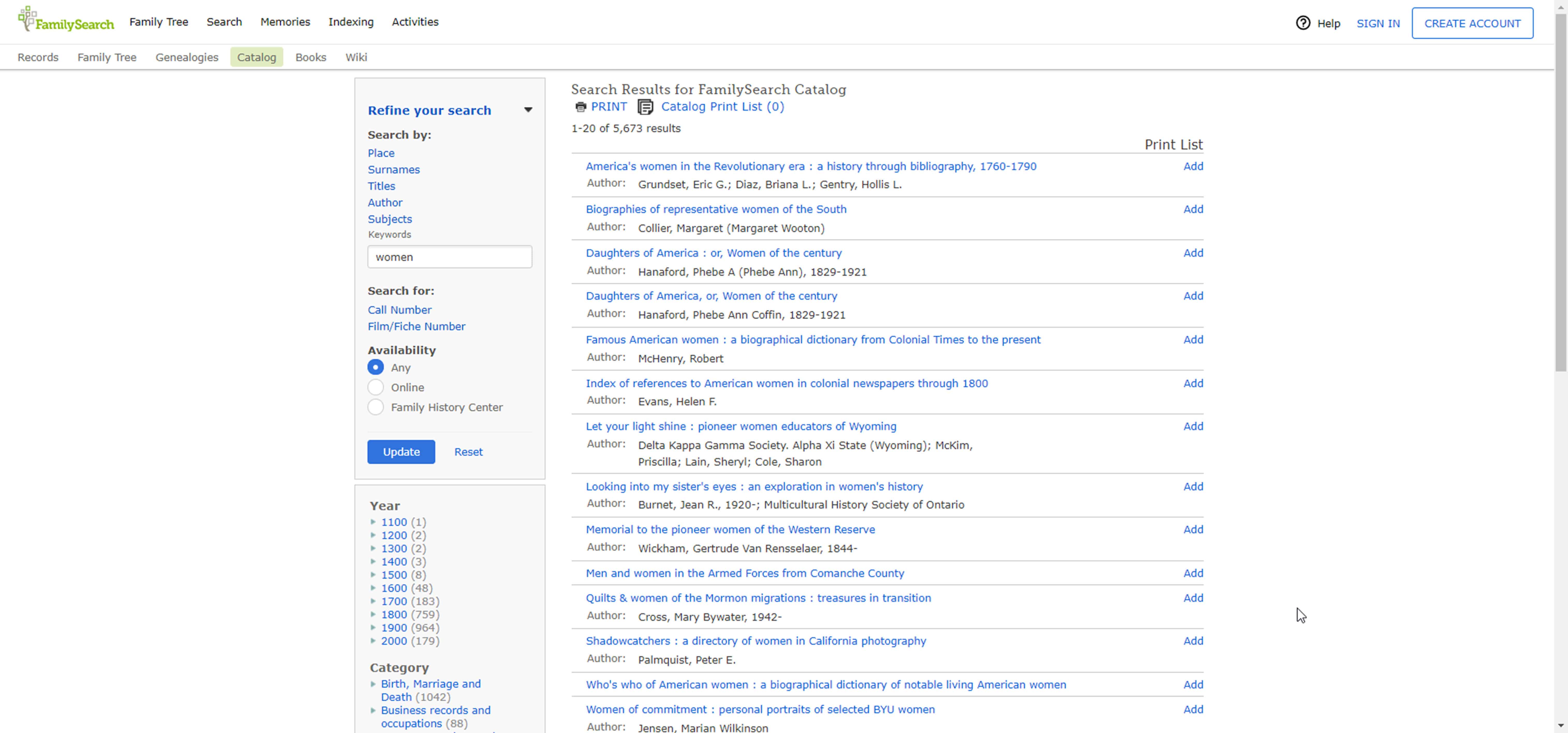
Part of becoming a better researcher is learning what is out there and exploring new-to-you collections.
What Will You Find?
It’s Women’s History Month, have you taken a look at the research you’ve done for your female ancestors? I know I have a lot of work to do but learning more about records and sources as well as making sure I've done an exhaustive search will help me tell their stories for generations to come.
Gena Philibert-Ortega is an author, instructor, and researcher. She blogs at Gena's Genealogy and Food.Family.Ephemera. You can find her presentations on the Legacy Family Tree Webinars website.


Comments (0)